Old Girl Profile: Louise Stevens (1985)

Louise Stevens has been volunteering with the charity Mum for Mum, an organisation that aims to support families in the challenges of early parenthood. When Louise submitted her grant application in 2025 for some funding to help further extend their outreach, the AOGU Anniversary Grant Committee were impressed with the focus on building processes and tools to enable scaling-up the support available.
The funding has been directed to Together in the First Year, a natural extension of Mum for Mum’s existing relationship-based support model, which currently provides weekly face-to-face visits to new mothers primarily across Sydney’s Eastern and Northern Suburbs. The new initiative will extend this proven approach nationally, offering free emotional support via phone, FaceTime, and text. Trained volunteers with lived experience of motherhood will be carefully matched with a new mum, providing regular connection, encouragement, and non-judgemental support throughout six months of her baby’s first year.
Louise recently joined us at the AOGU Speaker’s Breakfast to share more about this initiative and her work.
Tell us a little about your life and career since your school days?
Since leaving Abbotsleigh in 1985 I’ve done a few things that now looking back, make sense and connect and have led me to where I am today. I completed a Psychology degree in 1989 and consequently opened my own business in Mosman called Cherub Care supplying nanny’s and live in home help for families on the North Shore. I later decided to go back to university part-time and study (Masters of Education) while also bringing up my own 3 young children. I worked at Mosman ‘Boys’ Preparatory School for 2 years as a Kindergarten teacher before starting at Abbotsleigh Junior School in 2003. I remember doing a little dance around the kitchen after receiving the news that I had been successful in my application. I was so happy. I had a sense of ‘coming home’. My daughter was already a student in the Junior school, so I already wore a parent hat as well as AOGU hat which made it a tough interview process.
I can honestly say my time in the Junior school was an absolute highlight of my career and had we not moved to Queensland I believe I would still be there. In Queensland I worked in an International Baccalaureate (IB) school as the coordinator of academic support P-7, where I learnt so much about applying for grants and supporting children with diverse needs and their families at such vulnerable times. Upon my return to Sydney four years later I worked at St Catherine’s Waverley as Coordinator of Learning Enhancement K-6. It was here my interest in Positive Education really took off but it was my next position at Ascham where I taught for 10 years that I did further study in Positive Psychology and Wellbeing.
Along the way I’ve run workshops and weekend retreats as part of the GERRIC (gifted education) program at UNSW, implemented wellbeing initiatives and professional development for staff and community groups, developed curriculum and training modules and had a stint as a Business Development Manager for a social enterprise and I’m now officially retired.
The short answer is, I’ve studied, travelled, married and divorced, and had a career, but my most treasured thing I’ve done and what makes me truly ‘sing’ is being a Mum and most recently, Grandma.
When did you first get involved with charity work and volunteering? What was your initial inspiration?
My involvement in charity work and volunteering began as a student at school and continued through my professional life as a teacher, where I saw the importance of helping young people understand the value of service and community contribution. Over the years, I have led students in a range of fundraising and community initiatives, including coordinating an annual project supporting the Leukaemia Foundation for more than a decade.
My motivation has always been grounded in the belief that came from my Abbotsleigh days and my own families’ values – that those of us who are able, have a responsibility to give back where we can. I have also been particularly drawn to causes such as WAGEC (Women’s and Girls’ Emergency Centre) and OCRF (The Ovarian Cancer Research Foundation) because of personal experiences that have deepened my understanding of the challenges faced by the people they support. When a cause resonates with your own life, it becomes more than charity – it becomes an opportunity to raise awareness, advocate for change, and help ensure others receive the support they need.
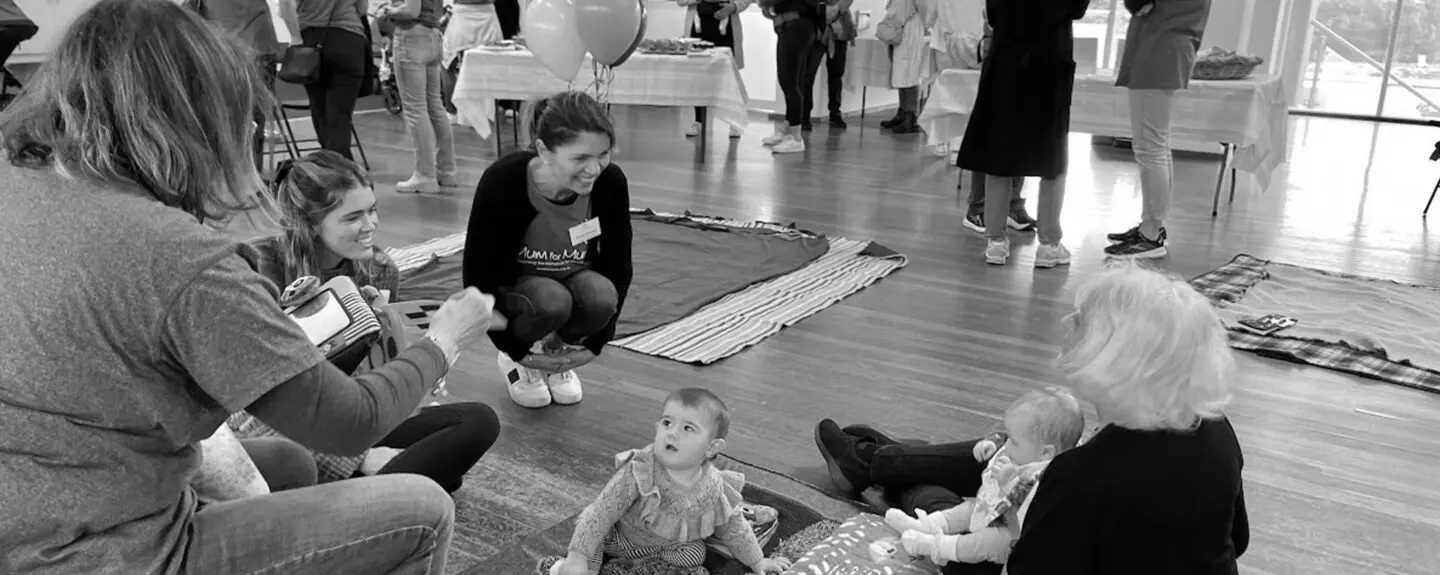
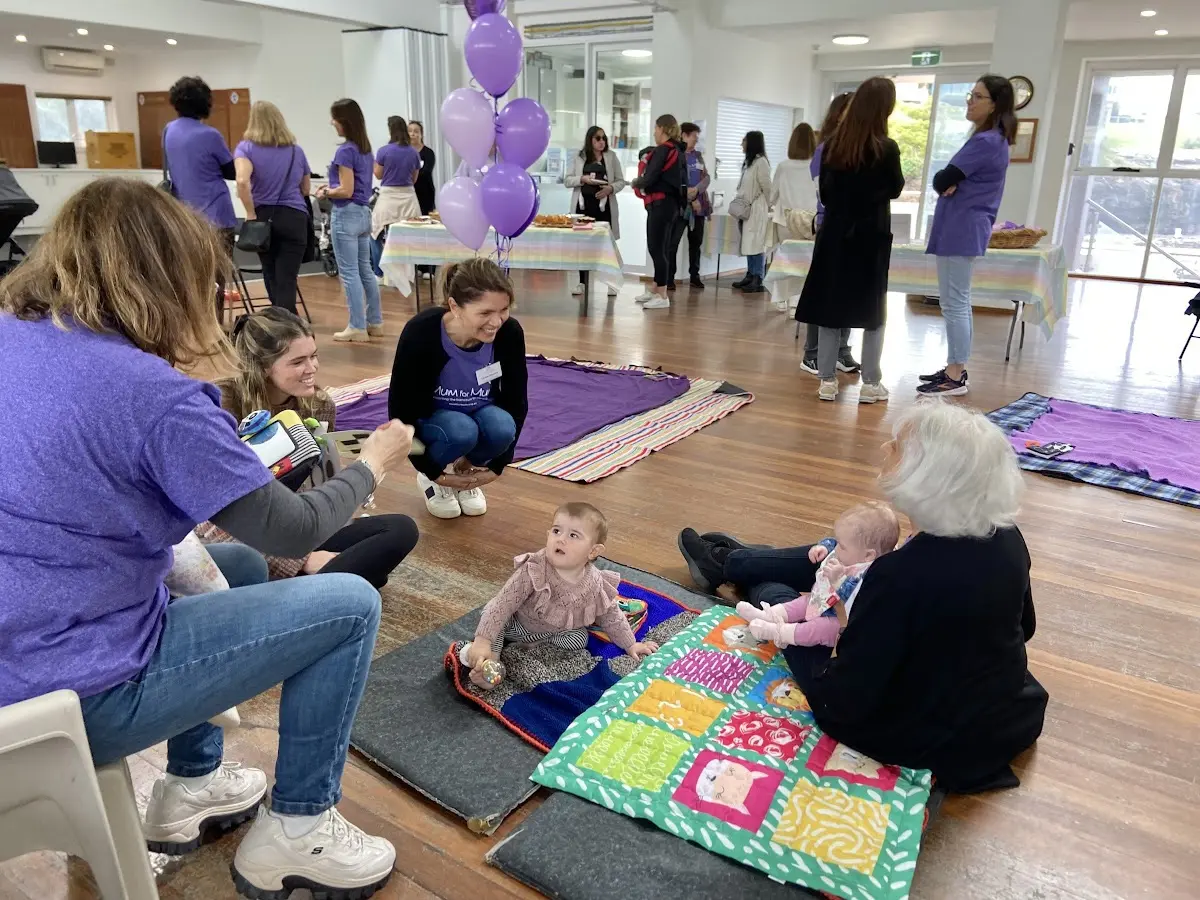
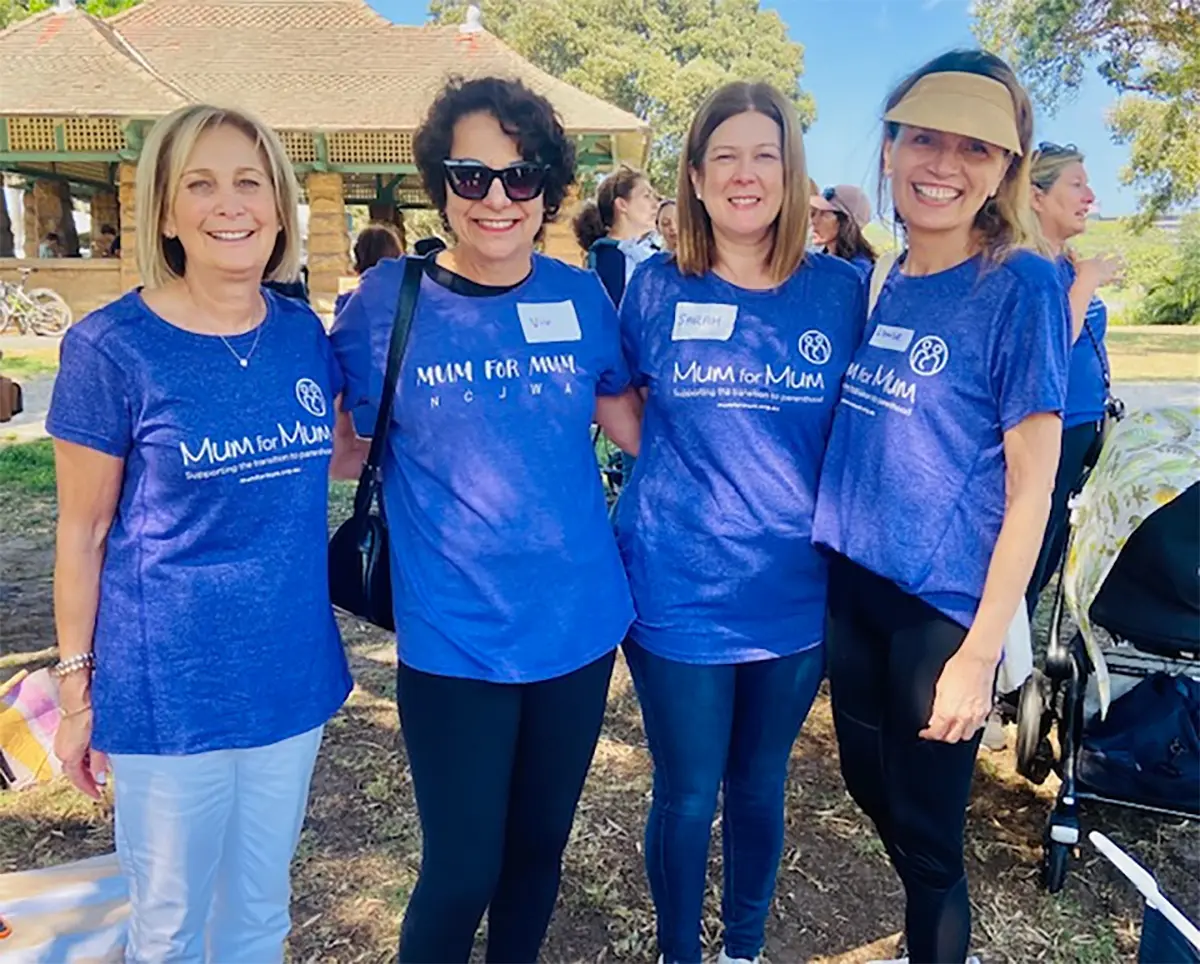
Mum for Mum came into my life around three or so years ago. It was actually my daughter who first introduced me to the incredible work of the organisation after she saw a flyer and suggested I might consider volunteering. I didn’t hesitate; I went online and completed the volunteer interest form immediately. After completing my initial training, I was matched with my first mum. I’ve supported three mothers through the full program, meeting two of them during their pregnancy and the third only weeks after her baby was born and walking alongside them through to their baby’s first birthday. I’ve also provided shorter-term support for two mothers during periods of acute need.
With every mother and baby, I often feel that I receive more than I give.
In addition to one-on-one support, I now also serve as a peer support for volunteers and conduct intake visits in the Eastern Suburbs. This role allows me to meet newly referred mothers at the very beginning of their journey with us—often when they are most vulnerable—to help match them with the right volunteer.
Last year, I was also invited to contribute to a small working group to redevelop our training program. Together, we created a suite of eight online learning modules, supported by quizzes and additional resources, helping to ensure our training remains accessible, consistent, up-to-date and of the highest quality.
I feel incredibly fortunate to be part of such a thoughtful and impactful organisation. And I’m genuinely excited about what lies ahead, because the need for this work is only growing.
Where do you think that focus comes from and why do you believe it’s important to you?
I recall ‘being of service’ and ‘volunteering’ was very much a focus when I was a student in both the Junior and Senior schools. Starting with the MS Readathon each year in the Junior School and later taking part in the 40-hour Famine (amongst other causes) in the Senior School. I remember Ms Street and doing the Initiative Pennant around Year 8. She was small in stature, but mighty in spirit.
I believe encouraging young people to volunteer gives them a sense of purpose, belonging, and perspective. It empowers them to make a positive contribution, while strengthening their connections to family, community, and the wider world. Through the ripple effect of service, young people learn empathy, responsibility, and trust, while experiencing the fulfillment that comes from helping others.
Volunteering also plays an important role in building stronger, more inclusive communities. It helps ensure that vulnerable people are not left to navigate life’s challenges alone and fosters the social connections that enable communities to thrive.
These benefits do not diminish with age. As adults, we too gain purpose, connection, and perspective through giving back. After all, everyone has something valuable to offer. Whether through listening, mentoring, supporting, or sharing practical skills, volunteers help create communities where people feel seen, valued, and connected.
As former Australian Governor-General Sir William Deane observed: “Volunteering is the ultimate exercise in democracy. You vote in elections once a year, but when you volunteer, you vote every day about the kind of community you want”.
Where did the idea for ‘Together in the First Year’ grow from?
Over time we began to notice something important. We were receiving an increasing number of referrals to support mothers who were living outside our hub areas in Sydney, as far as Western Australia!
This raised a simple but powerful question: How do we extend connection beyond geography?
How did you feel when you were awarded the AOGU Anniversary Grant, and what does it mean to the work you are supporting?
I was so excited and felt so grateful that not only did the AOGU have faith in my application but that they recognised the very real need for and importance of the work that we do; emotional support for new mothers – women supporting women – and the ripple effect this can have for their families and communities. Like Abbotsleigh, Mum for Mum believes in empowering women and this Grant is enabling us to support so many women do just that, including not only the recipients but the volunteers and the wider community.
What do you think are the biggest challenges facing charities and community organisations these days? Do you have any learnings to share with others?
A major challenge facing charity organisations today is our societal push towards an increasingly ‘busy, high urgency’ culture and people in general having multiple commitments that lessens their ability to sustain commitment. Capable volunteers are simply overcommitted and risk burnout. On top of this, the organisations are struggling to maintain regulatory frameworks and meet rising community demand. Mum for Mum’s phone support model has tackled this on both fronts; by offering volunteers the opportunity to continue to contribute in a valuable way through phone support they are able to lessen their time commitment and travel as they can fulfil their role from home enabling them to realise their other responsibilities such as caring roles, paid work or looking after their own health. Volunteers are also able to take on more than one mum while still maintaining a smaller time commitment than the face-to-face model involvement which in turn helps ease the increased community demand we’re experiencing. Offering online development sessions for our volunteers also allows us to stay abreast of our governance commitments.
I would encourage others to step into volunteering mindfully, considering realistically their availability and commitments so they can give of their best selves.
What’s the best aspect of your job? And what advice would you give someone wanting to step into the world of community volunteering?
The best aspect of my Mum for Mum volunteering is witnessing the difference I can make to an individual and in turn family and wider community. There is nothing more rewarding than knowing I am helping someone to help themselves by simply walking alongside them with a curious mind, without judgment, during a time of immense change, challenge and vulnerability. I’ve learnt so much about myself through helping others. Volunteering is a powerful way to create an impact while developing new skills as well as developing a greater sense self-awareness. “As we serve others we are working on ourselves; every act, naturally nourishes our own hearts as well”, Jesuit Resource.
Can you share a memory of your time at Abbotsleigh? How do you think the school has changed since you were a student?
My favourite times and memories from my time at Abbotsleigh would be the friends and sense of community I gained. I always felt safe and that I belonged. In 1979, when I was in Year 6, we celebrated The Year of the Child. I remember performing on stage in the Senior School a song that was later recorded and added along with others that was made into a record album! I remember feeling like I was a part of something bigger than me alone, I was part of a caring family. Mrs Claydon wrote the words to many songs we sang as a whole school that became favourites and lasted the test of time. Another memory, while not from my own days as a student, is from my days as a parent when my daughter was in Year 3. The Speech Day that year was at the Opera House and I’ll never forget being in the audience when the entire school, K-12, stood up and surrounded us all, singing the most amazing arrangement with the orchestra of ‘O Fortuna’. It was spectacular and reinforced that same sense of family I had experienced while at school and I so very much wanted my daughter to also enjoy.
School has certainly changed in terms of buildings, technology and even pedagogy, however, the core values of the school and overarching Christian framework I believe are not dissimilar albeit the language may differ in their expression. I love that the Junior School girls can ride their scooters around the grounds, building their resilience and self-confidence and becoming more aware of their limits and managing their boundaries all while being physically active. It reminds me of how we made cubbies in the bush along the boundary of the playground. Through play we were learning communication skills and teamwork as well conflict resolution when negotiating designs and spaces. The students may now use technology such as VR and digital design software to assist their learning while I used Cuisenaire rods and the SRA reading box, however, time hasn’t changed the fundamental purpose behind such tools – to be curious and develop a lifelong love of learning.
How did the education you received and your time at Abbotsleigh help you through your life so far?
Abbotsleigh reinforced and echoed my families’ values of respect, courage and perseverance. Within a Christian framework, service was not an option but a fundamental part of life. We all come across challenging times, I certainly have in my life and I dare say my refusal to give up and focusing on kindness have stood me in good stead over the years and I recognise these traits began back in my school days. Afterall, Abbotsleigh girls can do anything, that was the message I heard and what I’ve fallen back on, especially when times have been uncertain. It was also a key reason for choosing Abbotsleigh for my own daughter.
Thanks so much, Louise, for once again sharing your time and some of your story with us, and for your important support helping Mum for Mum and Together in the First Year. We wish you continued success!
Louise was interviewed by Kim Boniface (Anderson, 1985) in June 2026