
Our leadership legacy…
Abbotsleigh girls are renowned for being strong, caring, intelligent and Christian, with their inspiration stemming from their headmistress role models, who have guided and inspired more than 15,000 girls since 1885.
Miss Clarke came to Australia from England in 1884 to teach at her sister Ellen’s school, Normanhurst, at Ashfield. Perceiving a need for ‘academic’ schools for girls she founded Abbotsleigh in 1885. Miss Clarke believed in physical as well as mental education – her first curriculum offered ‘gymnastics under capable supervision’. She was also keen on French, a full academic curriculum for girls, and discipline. Right from the beginning Abbotsleigh had a reputation as a strict school – in other words, a proper school, not a finishing school for young ladies.
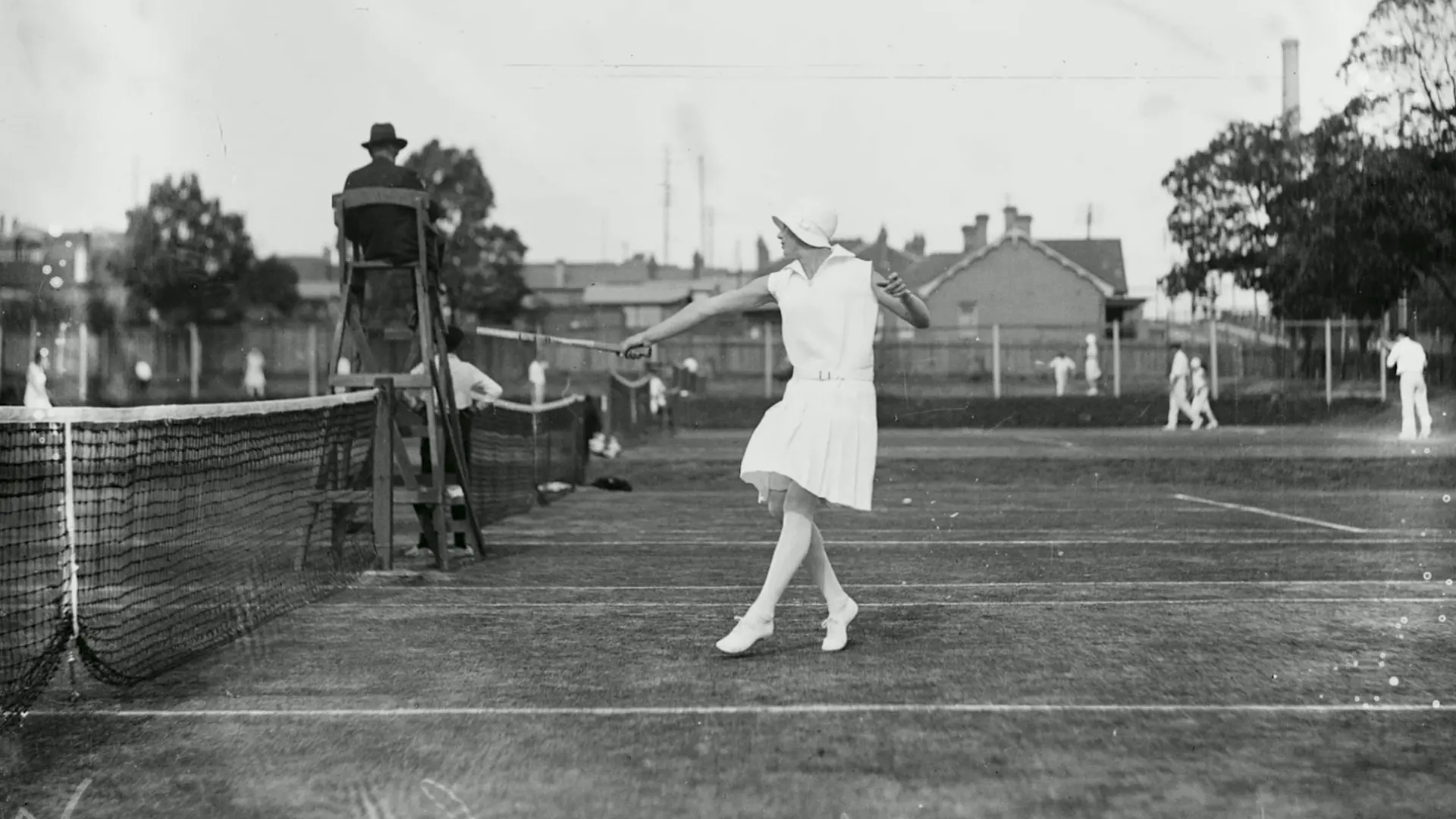
Miss Murray was responsible for starting the annual school magazine, The Weaver (1913), introducing a school uniform to stop the unsuitable dressing of some girls (1920) and interschool sport (Tennis v SCEGGS in 1913). She was adored by her girls, and boarder numbers grew so much that a new boarding house, Wollumbin, was purchased in 1914. Day girl versus boarder sport also began during this time. Miss Murray sold Abbotsleigh to the Anglican Church in 1924.
Our first Headmistress under the Anglican Church, Miss Poole’s aim was to continue the School’s ‘goodly tradition and precious heritage’ and she is described as having very high ideals. She believed that life was ‘to be lived worthily in the service of others’. She introduced Shakespeare Day (1925), changed the School motto into grammatical Latin and added new classrooms. Abbotsleigh joined the Tildesley Tennis Competition in 1928 and the GSSSU (the predecessor of IGSA) during her time.
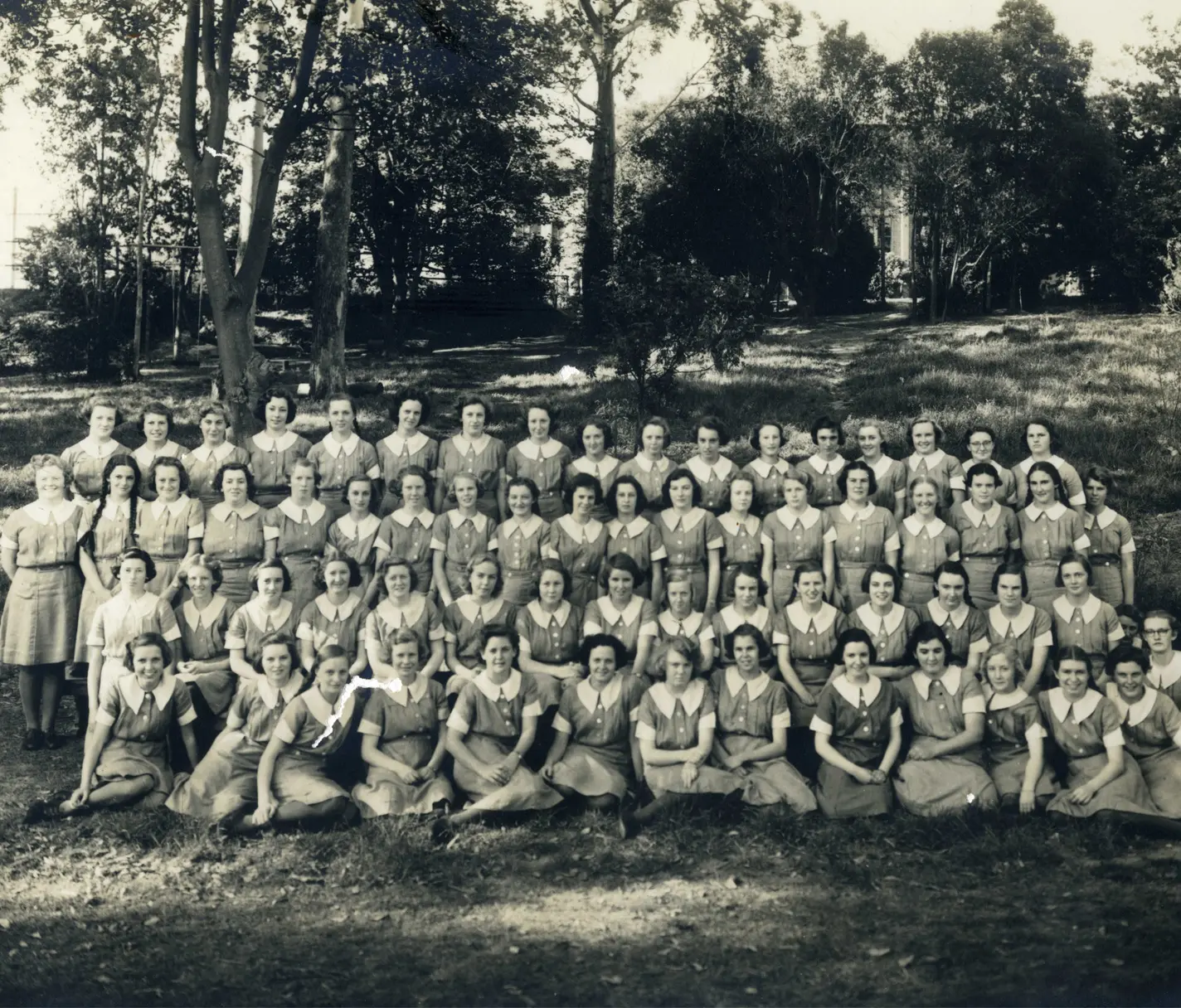
Miss Everett steered Abbotsleigh through the difficult years of the Great Depression and World War II. By 1939 Abbotsleigh was so popular that a waiting list was created and enrolments more than doubled during Miss Everett’s tenure. To accommodate the growth, she expanded the school’s footprint through property purchases and, just 10 days before her retirement, Miss Everett opened the new Junior School in Woonona Avenue. She was described in The Weaver as ‘always courageous and eager to try new innovations’; she introduced the House System (1931), the first Foundation Day (1933) and launched the new green uniform in 1936. In leading these changes, Miss Everett fostered a sense of community and established traditions that continue at Abbotsleigh to this day. She was awarded an MBE in 1960 for services to education and Everett Hall (Junior School) is named in her honour.
Miss Hirst was a devout Christian and seems to have been very highly regarded by the girls. During her tenture, the swimming pool was opened in 1957 after many years of planning. The P&F was also founded under her guidance. Miss Hirst returned to Abbotsleigh in 1985 to open Hirst Cottage – a boarding residence named in her honour.
Miss Archdale, affectionately known as ‘Archie’, was a staunch advocate for her girls. She credited with breaking down a rather rigid system of discipline at Abbotsleigh, introducing sex education and abandoning the gloves and hat as part of the school uniform. The Assembly Hall (1963) and Chapel (1965) both date from her time as headmistress. Miss Archdale oversaw the introduction of the Higher School Certificate in 1967 and in 1970 the Duke of Edinburgh’s Award became available to Abbotsleigh girls. The School library was called the Archdale Library from 1971, then revised to the Betty Archdale Library in 2006 when it relocated to its present, purposepbuilt home in the Abbotsleigh Research Centre.
Miss McCredie was the first (and so far, only) Abbotsleigh Old Girl to return as Headmistress. She was a pupil from 1940-1945 and also a Prefect. During Miss McCredie’s term as headmistress, facilities improved considerably with new science laboratories, a library extension, extra classrooms, a language laboratory and a Year 12 common room. In 1983, the Centenary Building was officially opened. Miss McCredie guided Abbotsleigh through two major anniversaries: the 90th birthday in 1975 and the Centenary in 1985. The McCredie House boarding residence was opened in 1990.
Under Mrs Nicholls’s leadership, the Abbotsleigh curriculum was redeveloped to respond not only to Australian and NSW educational imperatives and rapid changes in society, but also to the needs of the girls who would move into their careers in the 21st century. New facilities were built in the Junior School, in the boarding residences and in the Senior School. Mrs Nicholls also chaired the 21st Century Review in 1990, and the drama studio is named in her honour.
During Mrs Wheeldon’s tenure as headmistress significant initiatives were developed, in particular Service Learning. She encouraged the concept of Abbotsleigh as ‘the Australian school for world citizens’ and brought international community service into existence through a visit in 2001 to Crossroads Foundation in Hong Kong. In the 2006 Queen’s Birthday Honours, she was appointed a Member of the Order of Australia for her commitment to education. She is honoured through the School’s boarding residence, Wheeldon House, which opened in 2008.
Mrs Poole was a visionary and creative leader. During her tenure, Abbotsleigh formed a partnership with Yalari in 2008, creating a sustainable Indigenous Scholarship program. Mrs Poole strategically increased the School’s property footprint. She was instrumental in the development of many new building works, including the opening of the Early Learning Centre in 2010; the Abbotsleigh Centre for Environmental Education (ACEE) in 2011; the Grace Cossington Smith Gallery in 2013; and the Abbotsleigh Sports Precinct in 2015. The Judith Poole Sports Hall was named in her honour at the time of her retirement in December 2016. Mrs Poole embedded Service Learning into the fabric of Abbotsleigh, seeing it as an integral part of a Christian education for the girls to recognise their privileges, learn their responsibilities as global citizens and use their education to serve others.